The gambling industry loves to chase the next big trend. For the last five years, that trend has been virtual reality (VR). We keep hearing that VR will bridge the gap between your living room couch and the velvet-roped floors of a Las Vegas casino. But after eight years of testing live blackjack, roulette, and baccarat on everything from flagship smartphones to high-end desktop rigs, I’ve learned that "immersion" means more than just putting on a headset.. It's not always that simple, though

Most corporate marketing departments push the narrative that VR is the final piece of the puzzle for live dealer casinos. They talk about "unparalleled engagement" and "next-generation synergy." Strip away the fluff, and you are left with a simple question: Can a headset recreate the specific tension of a dealer flipping the final card in blackjack? Let’s look at the reality of current tech, mobile limitations, and the future of immersive digital entertainment.
The Desktop vs. Mobile Experience: Where We Are Now
Before we can talk about where VR is going, we have to acknowledge where we are. Your experience changes drastically depending on the hardware you use.
On a desktop, live dealer platforms rely on screen real estate. You have multiple camera angles, a clear betting grid, and a sidebar for chat. It feels like a command center. You can see the cards clearly, and the mouse gives you precise control over your bets. Exactly.. It’s clinical and functional.
On a mobile device, the experience changes. You aren’t looking at a sprawling dashboard; you’re holding a tiny window into a studio. The UX has to be hyper-optimized. Navigating a mobile interface requires big buttons and thumb-friendly menus. If the developer doesn't get this right, you end up hitting the "double down" button when you meant to "hit." Mobile live casinos are about speed and accessibility. You play on the bus, in a waiting room, or during a commercial break. You don't play for the "vibe"; you play for the convenience.
The Twitch Effect: Immediacy and Real-Time Interaction
Live gaming success doesn't just come from high-definition cameras. It comes from the culture of streaming. Look at Twitch. People don’t watch streamers just because the game looks good; they watch because of the interaction. When a streamer reacts to a win or a brutal loss, the audience shares that adrenaline.
You ever wonder why live dealer games attempt to replicate this. When a dealer acknowledges your chat message or talks you through a hand, that is the "real-time interaction" everyone chases. Does VR actually improve this? If you’re wearing a headset, you aren’t just watching; you’re occupying space. But right now, the latency of VR streaming is a massive hurdle. In a standard live dealer setup, the latency is usually under a second. In VR, the data overhead is significantly higher. If your connection drops, the "immersion" snaps faster than a rubber band.
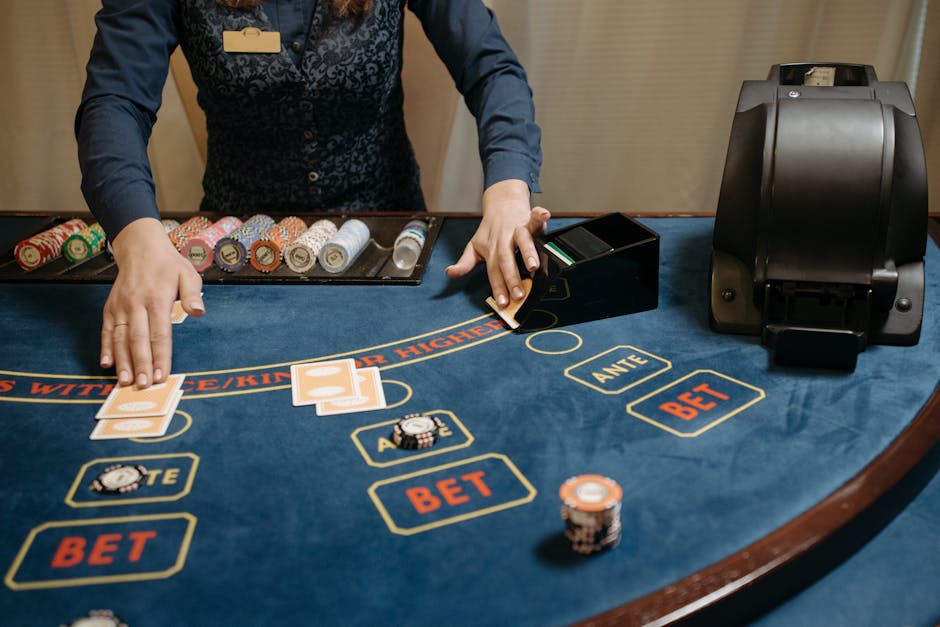
Why Vague Claims of "Immersion" Fall Flat
Marketing teams often claim VR will "eliminate the boundary" between player and casino. That’s a dangerous overpromise. If you put on a headset today, you aren't sitting at a table with other people. You’re sitting in an empty virtual room. You are still physically alone in your bedroom.
For VR to actually feel like a real casino floor, it needs more https://celebspeed.com/live-dealer-casino-experiences/ than just 360-degree video. It needs:
- Spatial Audio: You need to hear the clatter of chips to your left and the dealer’s voice coming from the right. Tactile Feedback: If you "touch" a digital card, your controller should vibrate to confirm the action. Social Presence: You need to see avatars of other players so you don't feel like you're playing in a vacuum.
Without these, VR is just a 360-degree video monitor strapped to your face. It’s actually *less* convenient than using a phone because it isolates you from your actual environment.
The Infrastructure: Streaming Quality and Data
According to Statista, the online gambling market is growing at a compound annual growth rate that suggests massive adoption, but the tech stack remains a bottleneck. High-quality 4K streaming to a phone is easy for most modern networks. Streaming 4K, low-latency, stereoscopic video for a VR headset is a completely different beast.
On a desktop, you have a stable wired or high-speed Wi-Fi connection. You can handle the bandwidth. On a mobile-first VR setup, you are fighting against thermal throttling and battery life. My experience with mobile VR headsets suggests that after 30 minutes of play, the device gets hot and the battery dies. For a casual blackjack player, that ruins the session.
Feature Desktop Live Casino Mobile Live Casino VR Casino (Current) Navigation Mouse/Keyboard precision Touch-optimized UI Gaze/Gesture control (clunky) Social Aspect Text chat only Text chat only Voice/Avatar potential Convenience High (at home) Highest (anywhere) Low (requires bulky gear)Convenience: The Silent Hero of UX
If you look at operators like MRQ (mrq.com), their success isn't built on groundbreaking hardware. It’s built on removing friction. They focus on fast registration, clean navigation, and payment methods that don't make you want to pull your hair out.
When you integrate VR into a platform, you add layers of friction. You have to log in while wearing a headset. You have to navigate a payment gateway while your vision is obstructed. If the operator doesn't solve these UI/UX hurdles first, the VR "experience" will be dead on arrival. A player wants to get from "login" to "first hand of blackjack" in under 60 seconds. Currently, VR adds two minutes of calibration and menu wrestling to that process.
The Verdict: Is VR the Future?
VR integration for casinos will not replace the desktop or mobile experience in the next three to five years. It will remain a niche for players who want a specific, high-intensity experience.
If you play on a phone, you want speed and ease. If you play on a desktop, you want data and control. If you play in VR, you want to feel like you’ve traveled somewhere else. Right now, the technology is caught in the middle. We are getting better at the "look" of these games, but we are nowhere near the "feel."
The industry needs to stop chasing the buzzword of "Virtual Reality integration" and start fixing the fundamental friction points. If they can make the VR registration as seamless as the mobile experience at sites like MRQ, and keep the latency as low as a standard Twitch stream, then we might have something. Until then, don't throw away your monitor just yet.