If you are new to sports betting, you have likely heard the phrase "the house always wins." While that sounds like a mystical rule of the universe, it is actually just a byproduct of how bookmakers manage math. The single most important concept you need to grasp is that odds reflect probabilities. If you don’t understand this, you aren't betting; you are just donating to a ledger.
In this guide, we are going to strip away the industry buzzwords. We’ll look at how these numbers are built, how they fluctuate during high-intensity tournament group stages, and why your choice of platform—whether a traditional shop or a Bitcoin sportsbook—changes how you actually get paid.

Probability and Odds Basics: The "Translation" Layer
At its core, a price offered by a sportsbook is a conversion of an event's likelihood into a payout ratio. When we talk about implied probability betting, we are simply referring to the percentage chance a bookmaker assigns to an outcome, after accounting for their own profit margin (the "vig" or "juice").
If a bookmaker offers you odds of 2.00 (Decimal) or +100 (American), they are telling you they believe that outcome has a 50% chance of happening. If the odds shorten to 1.80, the implied probability has increased to roughly 55.5%.
Odds Formats Explained
You will run into three main ways these probabilities are presented. You need to be able to read all three, or you’ll lose money simply by miscalculating your risk.
Format Region How it works Decimal Europe/Global Total payout (Stake x Odds). Easy for quick math. American USA Based on a $100 baseline. "+" is profit on a $100 bet; "-" is what you must bet to win $100. Fractional UK/Ireland Profit relative to stake (e.g., 5/1 means $5 profit for every $1 staked).Volatility and the "Group Stage" Trap
Novice bettors often mistake routine line movement for dramatic market shifts. During the group stages of major football tournaments, you will see lines swing wildly. This isn't always because a team got "better"; it’s often due to market efficiency. When a sportsbook sees heavy money on an underdog, they adjust the price to balance their own liability.
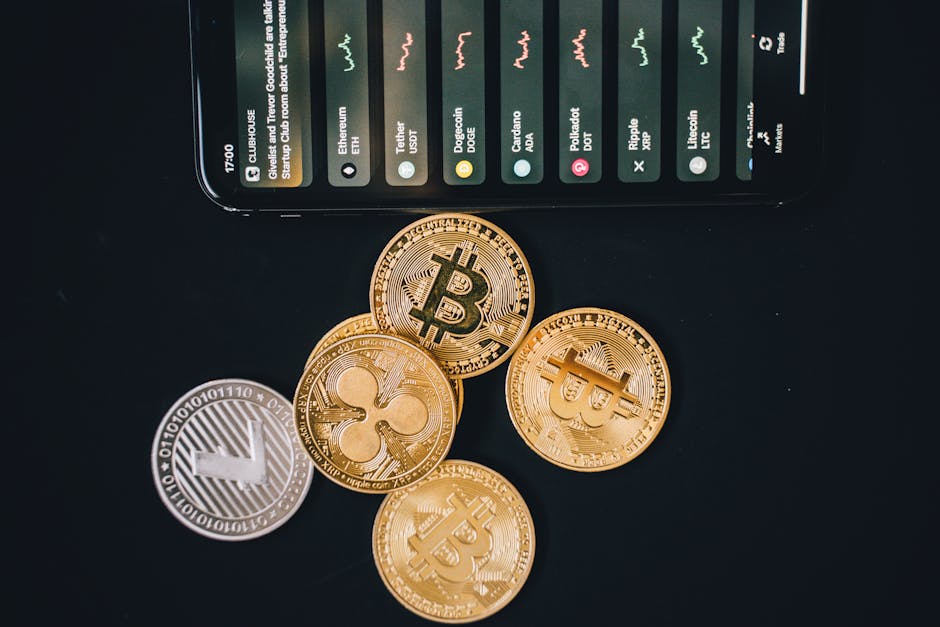
If you want to find value, stop looking for "locks." Look for where the public perception of probability clashes with the statistical reality. Use a resource like Bookmakers Review to compare these lines. If five books have a team at 1.90 and one book has them at 2.05, that difference is your edge. Don't be lazy—compare the prices.
Bitcoin Sportsbooks vs. Traditional Operators
This is where the marketing fluff usually starts, but I’m going to give you the blunt reality. Traditional sportsbooks are regulated, usually bank-linked, and have very specific KYC (Know Your Customer) requirements. Bitcoin sportsbooks rely on blockchain transparency, which is great for speed, but comes with specific trade-offs.
Transaction Speed and Settlement
The biggest pain point in iGaming is waiting for your money. Traditional books often take 1–5 business days to process a withdrawal via bank transfer or card. Bitcoin sportsbooks can settle in minutes, provided the network isn't congested. However, never assume "instant" means "instant." You still need to account for the book's internal manual review period, which they often bury in their Terms & Conditions.
The "Anonymity" Myth
Marketing departments love to tell you that crypto betting is "anonymous." Be careful here. Most reputable Bitcoin sportsbooks now enforce strict identity verification if you move meaningful volume. If a site promises you can bet without ever providing an ID, be skeptical of their licensing. If they aren't regulated, you have zero recourse if they decide to close your account with your balance inside it.
Payment Rails and Hidden Friction
Before you deposit, you need to look for the "missing specifics." Every payment method has a cost. If you are depositing via a credit card, look for "cash advance" fees from your bank. If you are depositing via Bitcoin, look for the exchange rate spread used by the sportsbook.
- Limits: What is the maximum withdrawal per transaction? Some books cap this at $2,000, which is a nightmare if you hit a parlay. Fees: Are there "hidden" withdrawal fees for using crypto? Some sites charge a flat percentage for "processing." Settlement Times: Check the "Payments" page. If it says "up to 72 hours," don't complain when your payout takes three days.
Why You Should Use Comparison Resources
I mention Bookmakers Review not because they are perfect, but because they provide the data that most sites try to hide. You should never sign up for a sportsbook best sites for football betting markets based on https://casinocrowd.com/is-bookmakers-review-good-for-comparing-bitcoin-sportsbooks/ a welcome bonus alone. A $500 bonus is useless if the book limits your account the moment you win or takes a week to pay out your winnings.
When you are looking at a match, go to a comparison site. Look at the spreads. If the spread is wider than it needs to be, you are paying an unnecessary tax on your potential profit. Betting is a grind; if you give away 2% of your value on every bet through bad lines, you will go broke, even if you are good at picking winners.
Final Thoughts: The Bettor's Checklist
If you take nothing else away from this, remember these three rules:
Odds are not "lucky" or "unlucky." They are a mathematical expression of probability. If you can't calculate the implied probability, stay off the bet. Shop the line. One book's -110 is another book's -105. That small difference, over the course of a tournament, is the difference between a winning and losing season. Audit your payments. Know the fees, know the limits, and know how long the "settlement" (the time it takes for money to hit your account) actually takes.Tournament group stages are noisy. There is a lot of adrenaline, and public opinion often skews the odds away from reality. Keep your head clear, use the tools available to compare your prices, and prioritize liquidity—you want to know that your money is safe and that you can get it out when you win.